

record Company
Artone Label Group
Music Theories Recordings
P.O. Box 8799
3009 AT
Rotterdam, the Netherlands

Four decades down the line, the history of early-’80s rock is cast in stone. But what if there was a missing chapter? A great lost band to rank alongside any of that era’s giants? An all-time-classic album that was only heard by the men – amongst them the West Coast’s best session musicians and Scott Gorham of Thin Lizzy – who recorded it? The story of The Western Front’s Eureka – finally released on 10 July 2026, some 40 years after it was caught in the bottle – is one of dogged belief against the odds. There were times when it seemed these twelve vital songs would remain as a record label write-off, or as a rotting box of two-inch masters in a California garage. Now, at last, the raising of this sunken treasure is a moment of overdue triumph, introducing a ‘new’ band to the world, airing timeless songcraft that still crackles with electricity, and threatening to upend the established hierarchy of rock’s great decade. “Eureka was a labour of love,” admits guitarist Marty Walsh. “But everybody is just beside themselves that this is coming out.” Keys player Derek Bergmann agrees: “I’m so glad it’s come to completion. We worked so hard on this record and we were so united in our focus. You can make all the great music in the world, but if it's just sitting on a shelf and nobody’s able to enjoy it – what's the point?” Rewind to Los Angeles, California, 1980. Following a run of acclaimed but fleeting bands – including The Campaign and Format Five – whose songs were too ahead of the curve to score a deal, the two session aces, alongside Walsh’s fellow guitarist and writing partner, Dennis O'Donnell, were ready to make their mark. “Dennis and I had seen Richard ‘Moon’ Calhoun singing with his band The Strand, at a club in the San Fernando Valley,” recalls Walsh. “Moon was incredibly impressive, so Dennis, Derek and I had a conversation about bringing him in. I called Moon up and as he recalls it, I asked: ‘Moon, you still got the fire?’ So we started rehearsals with Derek, Moon, and Darrell Verdusco (who I saw play one time and said, ‘Oh man, there's our drummer’). Everybody was a quality player without a doubt. And then we all just started grooving.” Meanwhile, Walsh tapped Thin Lizzy’s Scott Gorham: an old friend with whom he was then working at Supertramp drummer Bob Siebenberg's Unstable Studio. “I knew Scott in high school,” explains the guitarist of the dynamic between the so-called ‘Glendale Gunslingers’. “So I re-established that relationship. Scott has his thing: he's more of a straight-up distortion rock player, whereas I was playing on a lot of LA records with clean delay tones. That difference between us really charged things up. Scott and I both played bass, too, so between the two of us we just laid it down.” “I remember the Lizzy tour ending in LA,” picks up Gorham, “which was perfect timing to go and stay and put some guitars on Bob’s (best friend and now brother-law) – solo album. After a couple of days, my old friend Marty Walsh came over to do the same. Hadn’t seen him for years so I was excited about all of it. I suggested one day after recording ended: why not write something together? I had this certain riff I wanted to try. Marty jumped straight in with the perfect next section. Before we knew it, we were off and running.” The chemistry was an instant fit, recalls Moon. “Marty called me one day and said, ‘Hey man, I'm hanging out with this guy I grew up with who is the guitar player from Thin Lizzy – are you interested in checking him out?’ They were recording some new music at Bob Siebenberg’s studio so I went to see them. I sang a song called Danger. That was my introduction into the situation and everybody loved it so we kept going. Before long, we were The Western Front.” The band would spend the next two years writing and recording the Eureka material at Siebenberg’s studio. “This was such a great group of guys that egos were left at the door,” remembers Bergmann. “Keep in mind, too, that none of this stuff was programmed, sequenced or anything else. Everybody's parts were played. The musicianship and musicality across the board made it so pleasurable.” Tracked between ’83 and ’84, the Eureka track listing nods to its era, but still sounds vital in modern times. Anthemic openers Law Of The Jungle and Set Me Free are powered by the call-and-response of Walsh and Gorham’s guitars. Bergmann takes centre-stage with the shimmering synth melody of 1000 Nights, while the instant hook of Just Go is a masterclass of light and shade. “Scott and Marty came up with this call-and-response guitar part which has a lovely tonality and showcases the powerful combination of their unique playing styles,” says the keys man. “Syncopation and emphasis was probably my greatest contribution to that track,by adding the synth horn part to punch up the vocal.” Bergmann was also behind the soaring chorus of If I’m The One and the synthesizer soundscapes of the hard-driving Rain, with Gorham’s riff propelling Chain Of Light alongside Moon’s shout-it-back vocal. The light-footed groove of Danger belies a double-edged lyric (Walsh: “It's a love song,but the guy's out of his mind because he can't hang with his girl”), before the Bergmann-initiated Heartland fuses its dystopian themes with a pitch-bending synth that “amplifies that sense of loneliness”. Closing the album is the lift-off chorus of I Would Rather Be Lonely, before Man To Man combines its unique songstructure with a blend of acoustic and LinnDrums, and a chest-beating Moon vocal (“He just sells the shit out of it,” nods Bergmann. “You want to stand shoulder-to-shoulder with this guy!”). Finally, there’s the unbowed This Is War, with Walsh and Gorham’s weaving solos signing off in style. “It’s a real sonic highlight, one of those lightning-in-a-bottle moments,” says the keys man. “We couldn’t have recreated it. It just happened.” In a just universe, The Western Front’s debut album would have dropped in the mid-’80s, when the band’s new management team called them from Atlantic Records’ offices with assurances that their long-awaited major label contract was a done deal. Once again, however, disappointment was lurking as a sudden upheaval at the label wiped Eureka off the slate. The lineup scattered to their respective (and highly successful) careers, nursing the frustration of unfinished business. “It was disheartening,” reflects Walsh. “I felt so bad that we just couldn't get it. Scott went back to England and started 21 Guns. The whole Western Front thing was over. That was the last shot.” “We had a great time doing these tracks” agrees Gorham. “But as it happened, I needed to get back to London to start another European tour. I was gutted. Not knowing what would happen with these songs. But thankfully it did happen, probably a little later than we thought.” Fast-forward to 2023, when a Stockholm record man heard a couple of Western Front tracks online and reached out to ask why their near-mythical debut never saw light of day. The renewed interest drew the attention of other record labels, and at the suggestion of FOTB (friend of the band) and Toto guitar legend Steve Lukather, Walsh struck a deal with Ed Van Zijl at Mascot Records. Just as miraculous, the original recordings had made it back from the dead. “The two-inch masters had literally been in Dennis's garage,” reflects Bergmann. “I imagined these rotten boxes covered with mouse faeces, baking and unbaking in the heat. But we took them to a top-quality LA transfer house and waited for days with bated breath until we got the call: ‘It all came off without a problem. Everything's here…’” Equipped with the newly digitized transfers of their 40+ year-old analogue recordings, Marty and Derek would spend the next six months mixing and mastering the 12 songs of the album. Gorham says, “If it had not been for the dedication and inventiveness to the mixes of this 40 year old album by Marty and Derek, it would never have seen the light of day. From the very first mix I was completely blown away with the result!” Eureka might be a time capsule – but it’s also an ageless record for the here-and-now, reminding the modern rock scene of what this genre could and should be capable of. With the buzz building, it remains to be seen whether this elite group of individual musicians will fire the band back up or take these songs on the road. But for now, it’s enough to know that, at last, their youthful masterpiece is out there in the world. “We wrote and recorded all these great songs and it just got left on hold,” reflects Moon. “But here we are, 40 years later, and The Western Front’s Eureka lives – and I love it. I think it's the best thing I've ever done as a singer.” “I'm on cloud nine,” agrees Walsh. “Finally, people will hear this album that we worked so hard on. I teach two classes at the Berklee College of Music and I put Eureka on for my students. They were like: ‘Wow, what is this? It sounds amazing’. Hopefully, other people will think so too, and we'll get some action on this thing…” Written by Henry Yates
Four decades down the line, the history of early-’80s rock is cast in stone. But what if there was a missing chapter? A great lost band to rank alongside any of that era’s giants? An all-time-classic album that was only heard by the men – amongst them the West Coast’s best session musicians and Scott Gorham of Thin Lizzy – who recorded it?
The story of The Western Front’s Eureka – finally released on 10 July 2026, some 40 years after it was caught in the bottle – is one of dogged belief against the odds. There were times when it seemed these twelve vital songs would remain as a record label write-off, or as a rotting box of two-inch masters in a California garage.
Now, at last, the raising of this sunken treasure is a moment of overdue triumph, introducing a ‘new’ band to the world, airing timeless songcraft that still crackles with electricity, and threatening to upend the established hierarchy of rock’s great decade.
“Eureka was a labour of love,” admits guitarist Marty Walsh. “But everybody is just beside themselves that this is coming out.” Keys player Derek Bergmann agrees: “I’m so glad it’s come to completion. We worked so hard on this record and we were so united in our focus. You can make all the great music in the world, but if it's just sitting on a shelf and nobody’s able to enjoy it – what's the point?”
Rewind to Los Angeles, California, 1980. Following a run of acclaimed but fleeting bands – including The Campaign and Format Five – whose songs were too ahead of the curve to score a deal, the two session aces, alongside Walsh’s fellow guitarist and writing partner, Dennis O'Donnell, were ready to make their mark. “Dennis and I had seen Richard ‘Moon’ Calhoun singing with his band The Strand, at a club in the San Fernando Valley,” recalls Walsh. “Moon was incredibly impressive, so Dennis, Derek and I had a conversation about bringing him in. I called Moon up and as he recalls it, I asked: ‘Moon, you still got the fire?’ So we started rehearsals with Derek, Moon, and Darrell Verdusco (who I saw play one time and said, ‘Oh man, there's our drummer’). Everybody was a quality player without a doubt. And then we all just started grooving.”
Meanwhile, Walsh tapped Thin Lizzy’s Scott Gorham: an old friend with whom he was then working at Supertramp drummer Bob Siebenberg's Unstable Studio. “I knew Scott in high school,” explains the guitarist of the dynamic between the so-called ‘Glendale Gunslingers’. “So I re-established that relationship. Scott has his thing: he's more of a straight-up distortion rock player, whereas I was playing on a lot of LA records with clean delay tones. That difference between us really charged things up. Scott and I both played bass, too, so between the two of us we just laid it down.”
“I remember the Lizzy tour ending in LA,” picks up Gorham, “which was perfect timing to go and stay and put some guitars on Bob’s (best friend and now brother-law) – solo album. After a couple of days, my old friend Marty Walsh came over to do the same. Hadn’t seen him for years so I was excited about all of it. I suggested one day after recording ended: why not write something together? I had this certain riff I wanted to try. Marty jumped straight in with the perfect next section. Before we knew it, we were off and running.”
The chemistry was an instant fit, recalls Moon. “Marty called me one day and said, ‘Hey man, I'm hanging out with this guy I grew up with who is the guitar player from Thin Lizzy – are you interested in checking him out?’ They were recording some new music at Bob Siebenberg’s studio so I went to see them. I sang a song called Danger. That was my introduction into the situation and everybody loved it so we kept going. Before long, we were The Western Front.”
The band would spend the next two years writing and recording the Eureka material at Siebenberg’s studio. “This was such a great group of guys that egos were left at the door,” remembers Bergmann. “Keep in mind, too, that none of this stuff was programmed, sequenced or anything else. Everybody's parts were played. The musicianship and musicality across the board made it so pleasurable.”
Tracked between ’83 and ’84, the Eureka track listing nods to its era, but still sounds vital in modern times. Anthemic openers Law Of The Jungle and Set Me Free are powered by the call-and-response of Walsh and Gorham’s guitars. Bergmann takes centre-stage with the shimmering synth melody of 1000 Nights, while the instant hook of Just Go is a masterclass of light and shade. “Scott and Marty came up with this call-and-response guitar part which has a lovely tonality and showcases the powerful combination of their unique playing styles,” says the keys man. “Syncopation and emphasis was probably my greatest contribution to that track,by adding the synth horn part to punch up the vocal.”
Bergmann was also behind the soaring chorus of If I’m The One and the synthesizer soundscapes of the hard-driving Rain, with Gorham’s riff propelling Chain Of Light alongside Moon’s shout-it-back vocal. The light-footed groove of Danger belies a double-edged lyric (Walsh: “It's a love song,but the guy's out of his mind because he can't hang with his girl”), before the Bergmann-initiated Heartland fuses its dystopian themes with a pitch-bending synth that “amplifies that sense of loneliness”.
Closing the album is the lift-off chorus of I Would Rather Be Lonely, before Man To Man combines its unique songstructure with a blend of acoustic and LinnDrums, and a chest-beating Moon vocal (“He just sells the shit out of it,” nods Bergmann. “You want to stand shoulder-to-shoulder with this guy!”).
Finally, there’s the unbowed This Is War, with Walsh and Gorham’s weaving solos signing off in style. “It’s a real sonic highlight, one of those lightning-in-a-bottle moments,” says the keys man. “We couldn’t have recreated it. It just happened.”
In a just universe, The Western Front’s debut album would have dropped in the mid-’80s, when the band’s new management team called them from Atlantic Records’ offices with assurances that their long-awaited major label contract was a done deal. Once again, however, disappointment was lurking as a sudden upheaval at the label wiped Eureka off the slate. The lineup scattered to their respective (and highly successful) careers, nursing the frustration of unfinished business.
“It was disheartening,” reflects Walsh. “I felt so bad that we just couldn't get it. Scott went back to England and started 21 Guns. The whole Western Front thing was over. That was the last shot.”
“We had a great time doing these tracks” agrees Gorham. “But as it happened, I needed to get back to London to start another European tour. I was gutted. Not knowing what would happen with these songs. But thankfully it did happen, probably a little later than we thought.”
Fast-forward to 2023, when a Stockholm record man heard a couple of Western Front tracks online and reached out to ask why their near-mythical debut never saw light of day. The renewed interest drew the attention of other record labels, and at the suggestion of FOTB (friend of the band) and Toto guitar legend Steve Lukather, Walsh struck a deal with Ed Van Zijl at Mascot Records.
Just as miraculous, the original recordings had made it back from the dead. “The two-inch masters had literally been in Dennis's garage,” reflects Bergmann. “I imagined these rotten boxes covered with mouse faeces, baking and unbaking in the heat. But we took them to a top-quality LA transfer house and waited for days with bated breath until we got the call: ‘It all came off without a problem. Everything's here…’”
Equipped with the newly digitized transfers of their 40+ year-old analogue recordings, Marty and Derek would spend the next six months mixing and mastering the 12 songs of the album. Gorham says, “If it had not been for the dedication and inventiveness to the mixes of this 40 year old album by Marty and Derek, it would never have seen the light of day. From the very first mix I was completely blown away with the result!”
Eureka might be a time capsule – but it’s also an ageless record for the here-and-now, reminding the modern rock scene of what this genre could and should be capable of. With the buzz building, it remains to be seen whether this elite group of individual musicians will fire the band back up or take these songs on the road. But for now, it’s enough to know that, at last, their youthful masterpiece is out there in the world.
“We wrote and recorded all these great songs and it just got left on hold,” reflects Moon. “But here we are, 40 years later, and The Western Front’s Eureka lives – and I love it. I think it's the best thing I've ever done as a singer.”
“I'm on cloud nine,” agrees Walsh. “Finally, people will hear this album that we worked so hard on. I teach two classes at the Berklee College of Music and I put Eureka on for my students. They were like: ‘Wow, what is this? It sounds amazing’. Hopefully, other people will think so too, and we'll get some action on this thing…”

SCOTT GORHAM
Scott Gorham is a member and guitarist of the band Thin Lizzy with whom he recorded and released 12 albums. Scott is also the founding member of two other bands, 21 Guns and Black Star Riders, releasing 2 albums with each band.

Marty Walsh
Guitarist/Producer Marty Walsh is an assistant professor in the Ensemble and Music Production departments at Berklee College of Music in Boston, MA. A veteran of the 80’s and 90’s LA studio music scene, he has worked as a guitarist with some of the biggest names in the business. The early 1980s found him on the hits “9 to 5” by Dolly Parton, “She Works Hard ForThe Money” by Donna Summer, “Heart Light” by Neil Diamond and “Arthur’s Theme” by Christopher Cross, which won the Oscar for best original song, just to name a few. Marty also recorded and toured with the British band Supertramp in ’86 and ’88, and former CCR member John Fogerty in ’86 as well.
In the late 90's and early 2000’s Marty was the studio guitarist on numerous Nashville label “Curb Records” releases including three of Leann Rimes' albums, 'Sittin On Top Of The World', 'Leann Rimes' and 'I Need You', whose title track peaked at #11 and spent 25 weeks on the Billboard Hot 100, and Steve Holy's "Good Morning Beautiful" that topped the Billboard Country charts in 2002.

Richard "Moon" Calhoun
Richard "Moon" Calhoon is an accomplished American drummer, singer, and songwriter who became a central figure in the West Coast music scene. He rose to international prominence as the drummer for Rufus and Chaka Khan on their 1978 chart-topping album Street Player. Beyond his rhythmic contributions, Calhoun was a key songwriter for the group, co-writing the R&B hit "Stay" as well as tracks like "Destiny" “Blue Love” co-written with Dave “Hawk” Wolinski and "Best of Your Heart." His prolific session career also included recording and touring with major acts such as Andy Gibb, The Gap Band and Ray Parker Jr. In the late 1980s, Calhoun shifted focus to his vocal talents, fronting the Michael Thompson Band for their 1989 debut, How Long, which remains a landmark release in the AOR genre. After decades of songwriting and studio work, he made a celebrated return to the spotlight in 2023 with the album The Love Goes On. This recent collaboration with Michael Thompson features Calhoun as both lead vocalist and co-writer, showcasing a career that spans across the worlds of funk, soul, and melodic rock
Derek Bergmann
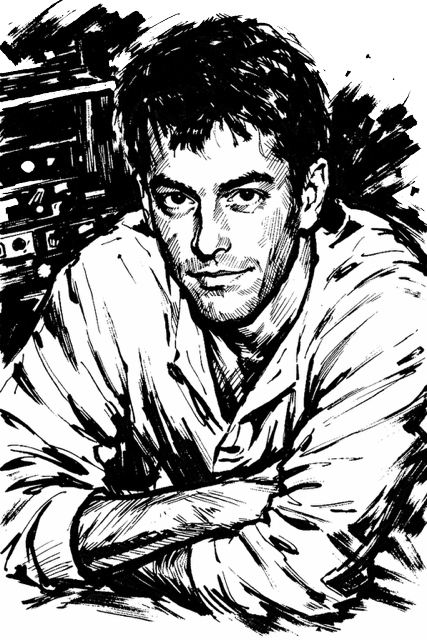
Derek Bergmann is a veteran session keyboardist, arranger and composer from New York. A classically-trained pianist, in the 1970s Derek was a sideman in a variety of rock, R&B and jazz groups playing the East Coast club circuit. Moving to California and joining the LA music scene in 1979, Derek did extensive session work which included collaborations with legendary songwriter/producer Jeff Barry, composing and arranging cues for film and TV scores while working alongside great talents including Nino Tempo and Bill Conti. Derek joined up with Marty Walsh and Dennis O’Donnell in 1980 (which began decades of music-making and friendship still going today - see Band Origins). In 1982, Derek began a collaboration with the amazing singer Yvonne Elliman to co-write and produce demos of her new songs including her 1984 LA Olympics theme. In late 1983, Derek joined singer Henry Small and his band Prism for their 1984 North-American tour where they shared the stage with Loverboy, Kansas, .38 Special, and The Beach Boys. Following the tour, Derek and Henry continued their writing and recording collaboration. Derek and Marty also continue their studio work together on a variety of writing, recording and production projects.

Darrell Verdusco
Darrell Verdusco moved to Los Angeles from San Francisco in 1977. He began touring and recording with singer/songwriter Dirk Hamilton, making two records with him. At that time he also began working and recording with John Hiatt and guitarist Ry Cooder. It was around this time that Darrell met Marty Walsh and began recording the Western Front tracks. During his time in LA, Darrell also worked with other artists including Eddie Money (co-writing a song on Eddie’s PLAYING FOR KEEPS album), Van Morrison, Stevie Nicks, and producers Tony Visconti (David Bowie), Ron Nevison and Bruce Botnick (Eddie Money), and Hugh Murphy who produced the classic “Baker Street” for Gerry Rafferty. Darrell also worked extensively with guitarist Mark Knopfler of Dire Straits. In 1985, Darrell moved back to San Francisco and began a long affiliation with the Jefferson Airplane/Starship family. Playing in Jefferson Airplane lead singer Marty Balin’s solo band led to Darrell playing in, and on, the classic KBC BAND record with Paul Kantner, Marty Balin and Jack Casady of Airplane fame. In 1993, Darrell took over drum duty for Starship featuring Mickey Thomas - one of the most legendary singers in rock history. And to this day, after touring in more than 40 countries and performing thousands of shows, Darrell is still proudly providing the backbeat to Mickey’s vocals. As Darrell likes to say…. “What else am I gonna do?!”

Dennis O'Donnell
Dennis O'Donnell is a veteran music publishing executive, producer, and consultant with a 30+ year career spanning film, television, and recorded music. The son of legendary broadcaster Charlie O’Donnell (American Bandstand,Wheel of Fortune), he grew up in the heart of the 60’s, 70’s, and 80’s Los Angeles entertainment scene and went on to success as VP of Film, TV, and Advertising Music for Leiber & Stoller Music, working with iconic catalogs including Elvis Presley, Rodgers & Hammerstein, and James Brown. His work includes major film, Soundtrack, TV, and advertising placements, along with key consulting roles for The Walt Disney Studios, Gibson/Baldwin, Primary Wave, and others. He continues to advise on catalog development, acquisitions.